Quick Answer
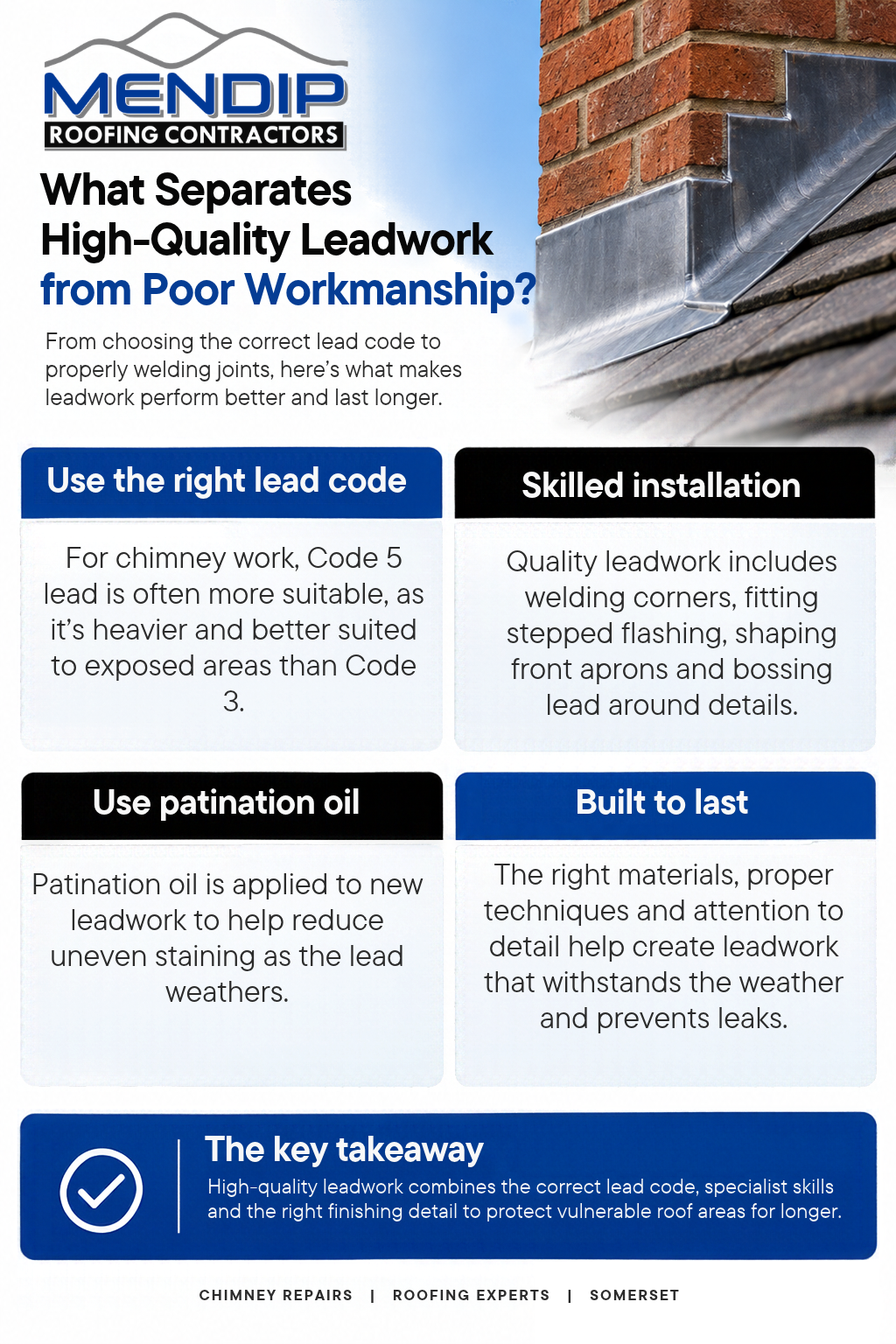
High-quality leadwork comes down to using the correct materials, specialist installation techniques and attention to detail.
Experienced roofers understand how to weld lead corners, fit stepped flashing, shape front aprons and boss lead around chimney details.
Choosing the correct lead code is equally important. For chimney work, heavier Code 5 lead may be more suitable than thinner Code 3 lead, which can be more vulnerable to splitting as temperatures change.
At Mendip Roofing Contractors, we also use patination oil as part of the finishing process. Properly installed leadwork helps protect vulnerable roof areas against water ingress.
the quality of leadwork can make a significant difference to your roof performance
Leadwork is an important part of protecting your roof against water getting in, particularly around chimneys and other areas where different roof surfaces meet.
However, not all leadwork is installed to the same standard. The type of lead used, how it’s shaped and the quality of the joints can all affect how well it performs over time.
At Mendip Roofing Contractors, we believe good leadwork starts with choosing the right materials and having the skills to install them properly.
Why does the quality of leadwork matter?
Lead is used in roofing because it can be shaped to protect areas where water might otherwise enter, including around chimney stacks.
But simply fitting a piece of lead isn’t enough.
Lead expands and contracts as temperatures change. If the wrong thickness is used or the material hasn’t been properly worked, it can become more vulnerable to splitting.
Good workmanship means understanding how the lead needs to perform, not just making it fit around the roof.
What's the difference between Code 3 and Code 5 lead?
One of the biggest differences between high-quality and poor leadwork is using the correct lead code for the job.
Lead is available in different thicknesses, identified by codes. The higher the code, the thicker and heavier the lead.
For chimney work, we would recommend using Code 5 lead because of its greater weight and suitability for exposed areas.
Code 3 lead is thinner, cheaper and easier to bend, which can make it tempting to use where a heavier specification would be more appropriate.
However, using thinner lead simply because it’s easier to work with can create problems later.
As our director explains:
“For chimneys, you want to be using Code 5 lead because it’s heavier and better suited to the job. Some people use Code 3 because it’s cheaper and easier to bend, but it can split more easily as the lead expands and contracts.”
The correct lead code should always be selected for the particular application, rather than choosing a material purely on price or convenience.
Chimney Leadwork Checklist
Five key details that can make a difference to the quality of your leadwork.
Your Leadwork Summary
This is a general visual checklist, not a technical inspection. Do not climb onto the roof to check these details.
Why are lead welding and shaping skills important?
High-quality leadwork also depends on how well the material is fitted around the roof.
Some areas require more skill than simply cutting and bending a sheet of lead into place.
For example, experienced roofers need to understand how to:
Weld lead corners: Create properly formed joints where different sections of lead meet.
Fit stepped flashing: Work lead into the stepped joints where a chimney meets a pitched roof.
Shape front aprons: Form lead around the front of a chimney so it fits the roof detail correctly.
Boss lead: Carefully shape the material around corners and other details without unnecessarily cutting it.
These techniques help create well-fitted leadwork that protects the vulnerable junctions around a chimney.
Poorly formed corners or unsuitable joints can leave areas where water may eventually find its way through.
Read More: What Are The Most Common Causes Of Repeat Roof Leaks?
What role does patination oil play in good leadwork?
Another thing we think is really important is the use of patination oil.
This is applied to newly installed leadwork to help prevent the formation of uneven white carbonate staining as the lead weathers.
It can also help reduce staining on surrounding roof materials.
Although patination oil doesn’t replace correct fitting or suitable lead thickness, it’s part of the finishing process that we consider when completing leadwork.
How can you tell whether leadwork has been installed properly?
It isn’t always easy to judge the quality of leadwork from ground level.
A neat-looking piece of flashing doesn’t necessarily tell you whether the correct lead code has been used or whether the joints have been formed properly.
When assessing existing leadwork, things that are important to consider include the lead specification, the condition of corners and joints, how the flashing has been shaped and whether there are signs of splitting.
A professional inspection can help establish whether the leadwork is suitable for its location or needs attention.
Getting chimney leadwork right the first time
The difference between good and poor leadwork often comes down to material choice, specialist skills and attention to detail.
Using the correct lead code, properly welding and shaping joints, and applying suitable finishing treatments all contribute to a better-quality installation.
At Mendip Roofing Contractors, we understand the importance of getting these details right, particularly around chimneys where poorly installed flashing can lead to roof leaks.
If you’re concerned about existing chimney flashing or need new leadwork installed, contact Mendip Roofing Contractors to discuss your roofing requirements.