Quick Answer
Correctly installed leadwork can last for decades because it provides durable, weather-resistant protection around chimneys and vulnerable roof junctions.
Its longevity depends on using the correct lead code, thickness and width, alongside skilled installation techniques.
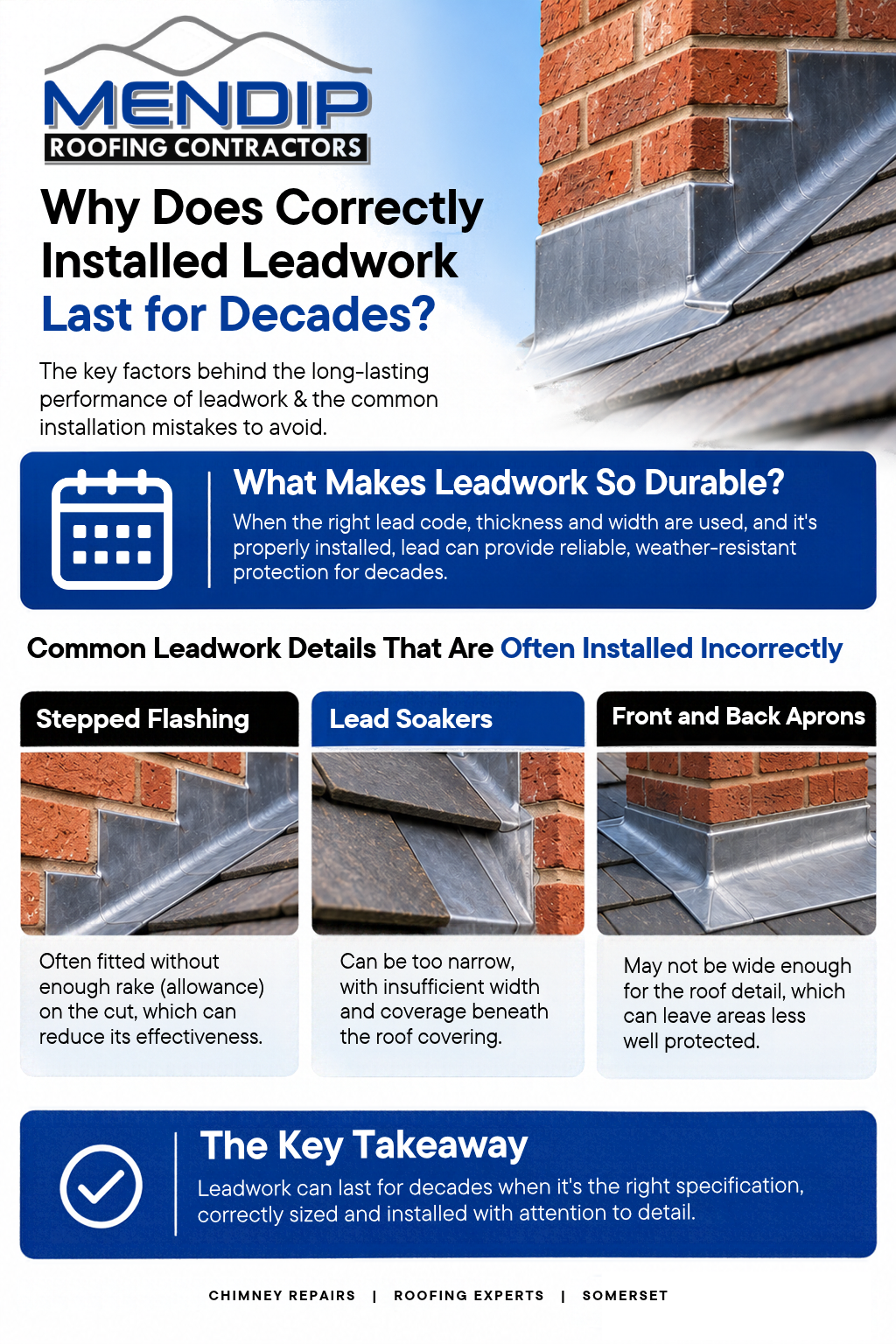
Common mistakes include poorly fitted stepped flashing, lead soakers with insufficient coverage, and front or back aprons that are too narrow. These issues can allow rainwater beneath the roof covering.
At Mendip Roofing Contractors, we use traditional leadworking techniques and carefully selected materials to help protect roofs against water ingress, ensuring each component is properly measured, shaped and fitted for long-lasting performance.
How the right lead thickness, width and installation techniques help protect your roof against water ingress for years to come.
Lead has been used in roofing for hundreds of years, particularly around chimneys and other areas where different roof surfaces meet.
When installed correctly, it’s a material that can provide reliable protection for decades. However, its longevity depends on more than simply choosing lead instead of another material.
At Mendip Roofing Contractors, we know that the lead code, thickness, width and quality of the installation all play an important part in how well leadwork performs over time.
What makes leadwork so long-lasting?
One of the main reasons leadwork can last for decades is its ability to provide a durable, weather-resistant covering when properly specified and installed.
Lead can be shaped to fit around chimney stacks, roof junctions and other detailed areas where water could otherwise enter.
However, choosing the right lead for each application is essential.
The lead code determines the thickness and weight of the material, while the width and overall dimensions must be suitable for the area being protected.
If the lead is too thin, too narrow or incorrectly fitted, it may not provide the coverage or durability needed.
Our director says:
“If you’ve got the right code of lead, the right thickness and the right width for the job, that’s what helps keep the water out. It’s the traditional way of doing it, and it’s been used for hundreds of years.”
Correctly installed leadwork also needs to accommodate the natural expansion and contraction of the material as temperatures change.
Leadwork Longevity Checklist
Five details that help leadwork provide lasting protection.
Your Leadwork Summary
This checklist provides general guidance only. It is not a professional roof inspection. Do not climb onto your roof to check these details.
Why is lead traditionally used around chimneys?
Chimneys are particularly exposed parts of a roof, and the junction between the chimney brickwork and roof covering needs careful attention.
Lead has traditionally been used in these areas because it can be formed around the chimney and worked into the roof details to create effective weather protection.
It also provides a distinctive, traditional finish.
We would always recommend lead over alternatives such as fibreglass for chimney flashing work, particularly because of its suitability for detailed shaping and its appearance once installed.
While different roofing materials have their own applications, lead remains a well-established choice for traditional chimney flashing.
Which leadwork details are most commonly installed incorrectly?
Even when the correct material has been chosen, poor installation can affect how well it protects the roof.
Here are several areas where mistakes are particularly common:
Stepped flashing
Stepped flashing is installed where a chimney meets a pitched roof, following the lines of the brickwork.
One common mistake is failing to provide sufficient rake or allowance when cutting and shaping the lead.
If the flashing isn’t correctly formed and fitted, it may not provide the intended protection at the junction between the chimney and roof.
Lead soakers
Lead soakers are individual pieces of lead fitted beneath the roof covering alongside a chimney or adjoining wall.
Their purpose is to help direct water away from vulnerable junctions.
Insufficient width and coverage are common installation problems.
If the soakers are too narrow, they may not extend far enough beneath the roof covering or provide the overlap needed to keep water out.
Front & back aprons
Lead aprons protect the junctions at the front and rear of a chimney.
The width of the lead is particularly important here.
If an apron hasn’t been made wide enough for the roof detail, it may leave areas inadequately protected against rainwater.
Correct sizing and shaping help ensure the lead provides the necessary coverage.
Incorrect lead code & thickness
Another common mistake is using lead that’s too thin or too light for the job. Different roofing details require different lead specifications.
Choosing a lower lead code simply because it’s cheaper or easier to work with can compromise the quality of the finished installation.
The correct code should be selected according to the particular roof detail and relevant installation guidance.
Why does the width of lead flashing matter?
It’s easy to focus on the thickness of lead, but the width is just as important. Lead flashing needs to provide sufficient coverage across the junction it’s protecting.
For example, soakers must extend far enough beneath the tiles, while front and back aprons need to be sized appropriately for the chimney and roof covering. When these components are too narrow, rainwater may find a route beneath the flashing.
This is why experienced roofers assess the individual roof detail before cutting and fitting the lead. Using good-quality material won’t compensate for incorrect measurements.
Can poorly installed leadwork fail prematurely?
Yes. Even a durable material like lead can develop problems when it hasn’t been correctly specified or installed. Common workmanship issues include insufficient coverage, unsuitable lead thickness and incorrectly formed flashing details.
Over time, these weaknesses can increase the risk of water getting beneath the roof covering. Lead also expands and contracts with temperature changes, so its installation needs to allow for this movement.
A properly designed installation takes these factors into account, helping the leadwork perform as intended for many years.
Why experienced workmanship makes the difference
The longevity of leadwork isn’t just about the material itself. It’s about understanding how each component needs to fit and function. From stepped flashing and soakers to front and back aprons, every detail needs to be correctly measured, shaped and installed.
At Mendip Roofing Contractors, we understand the importance of using the right lead code, thickness and width for the job, alongside traditional leadworking techniques. If you’re concerned about existing chimney flashing or need new leadwork installed, contact Mendip Roofing Contractors to discuss your roofing requirements.