What Do Experienced Roofers Look for Around Chimneys That Homeowners Can't See from Ground Level?
Quick Answer
Experienced roofers look for chimney problems that aren’t easily visible from ground level, including broken roof tiles, loose lead flashing, damaged brickwork, deteriorating pointing and loose flaunching around chimney pots.
They also check for splits in the leadwork and blockages in the back gutter behind the chimney, where moss and debris can cause rainwater to overflow into the roof.
At Mendip Roofing Contractors, we inspect both the chimney and surrounding roof area to identify potential problems that homeowners might otherwise miss.
A professional inspection can help uncover hidden damage and establish whether repairs are needed.
The hidden chimney problems that can lead to roof leaks
A chimney might look perfectly fine when you’re standing in the garden, but that doesn’t always mean everything around it is in good condition.
Some of the most common causes of chimney-related roof leaks are difficult to spot from ground level. Broken roof tiles, loose lead flashing and deteriorating mortar can all allow water to find its way into the roof.
Sometimes, these are only visible below the brickwork, but a skilled roofer can tell from an inspection.
At Mendip Roofing Contractors, we know what to look for when inspecting a chimney and the surrounding roof area.
What problems can be hidden around a chimney?
When inspecting a chimney, we don’t just look at the brickwork. We also check the roof tiles, leadwork and other areas where water could potentially get through.
Some of the main things we look for include:
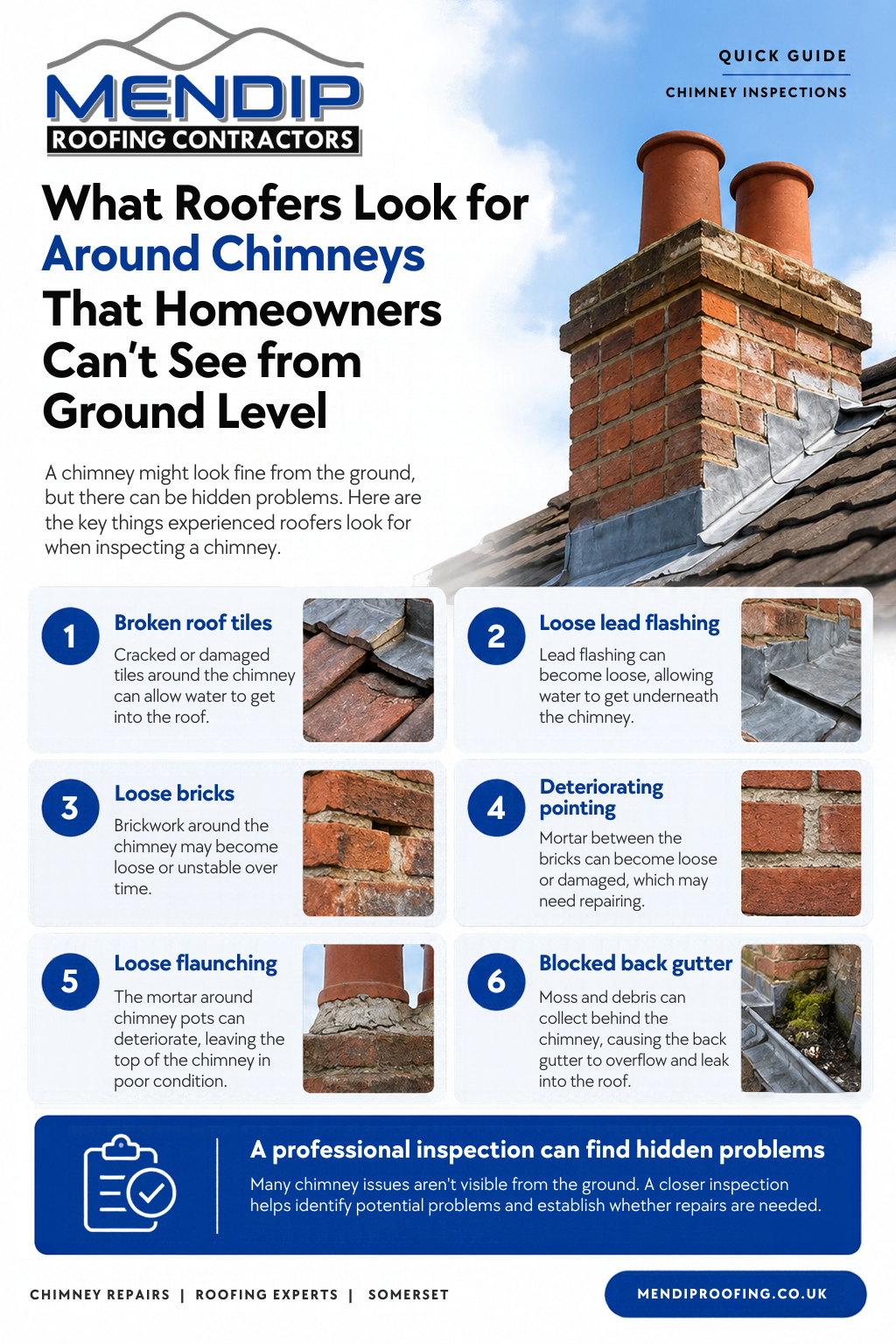
Broken roof tiles: Cracked or damaged tiles around the chimney can leave the roof vulnerable to water getting in.
Loose lead flashing: Flashing helps protect the junction between the chimney and roof. If it comes loose, water may be able to get underneath.
Loose chimney bricks: Brickwork that has become unstable may need repairing or rebuilding.
Deteriorating pointing: Loose or missing mortar between the bricks can indicate that the chimney needs attention.
Loose flaunching: The mortar around the chimney pots can deteriorate, leaving the top of the chimney in poor condition.
Splits in the leadwork: Even where leadwork flashing appears to be in place, splits can create a route for rainwater.
These are all issues that can be difficult for a homeowner to assess properly from the ground.
Chimney Inspection Checklist
What could be hidden from ground level?
Select any issues you're concerned about. You don't need to climb onto the roof to complete this checklist.
Even if a chimney looks fine from the ground, a roofer may find hidden damage around the tiles, leadwork, brickwork or back gutter.
General guidance only. Never climb onto a roof or approach loose chimney brickwork to investigate.
Why is the back gutter behind a chimney important?
One area that can easily be overlooked is the back gutter behind the chimney.
This is where rainwater needs to drain away from the roof area behind the chimney stack.
Over time, moss and other debris can collect in this space. If the back gutter becomes blocked, rainwater may overflow instead of draining away properly.
That overflowing water can then find its way into the roof, potentially causing a leak.
It’s one of the reasons why a chimney inspection should include the surrounding roof details, not just the chimney itself.
Read More: Why Do Chimney Problems Often Start Below The Visible Brickwork?
Why can chimney problems be difficult to spot from the ground?
From ground level, it’s often possible to see the general condition of a chimney, but smaller defects aren’t always obvious.
A split in the lead flashing, a broken tile tucked behind the chimney or loose mortar around a chimney pot may be difficult to identify without getting a closer look.
As our founder & director of Mendip Roofing Contractors explains:
“We look for broken tiles, loose lead flashing, loose bricks and pointing, and whether the flaunching is loose. We also check if moss or debris is blocking the back gutter, because that can cause water to overflow into the roof.”
Why does a professional chimney inspection matter?
A chimney leak isn’t always caused by one obvious problem.
Water could be entering through damaged flashing, broken tiles or an overflowing back gutter. That’s why it’s important to inspect the different parts of the chimney and surrounding roof before deciding what areas of your chimney need repairing.
At Mendip Roofing Contractors, we look beyond what’s visible from the ground to help identify the source of chimney-related roofing problems.
If you’re concerned about the condition of your chimney or have noticed signs of a leak, contact Mendip Roofing Contractors to arrange an inspection.