
Quick Answer
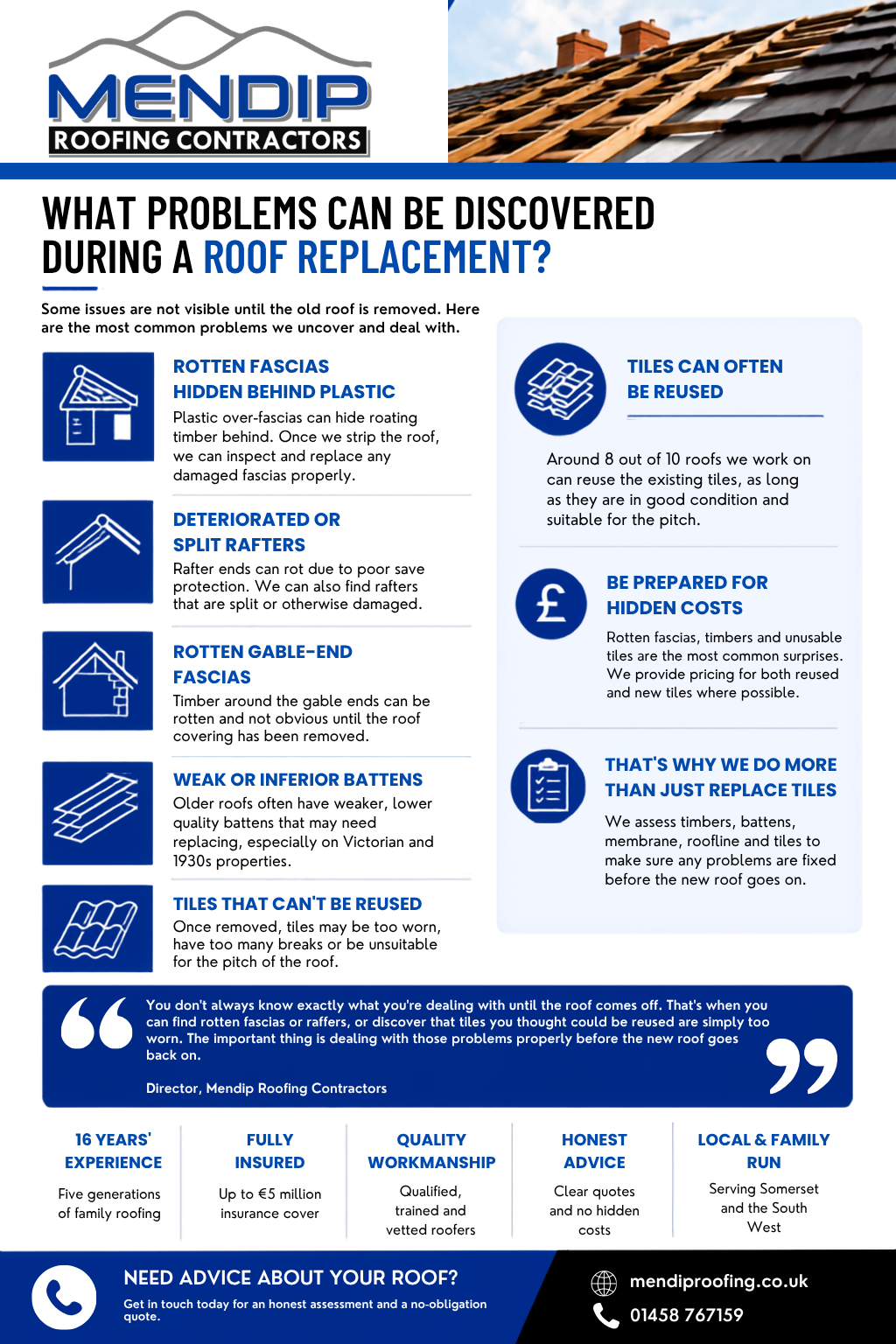
Some roofing problems only become clear once the existing roof has been stripped to install a new roof. We can uncover rotten timber fascias hidden behind plastic coverings, deteriorated or split rafters, damaged rafter ends and weaker battens, particularly on older properties.
Existing tiles can also cause surprises. Although we can reuse tiles on many roof replacements, once they are removed we may find that too many are broken, the channels are badly worn or the tiles are unsuitable for the pitch of the roof.
This is why a roof replacement involves more than simply removing old tiles and putting them back. The underlying timbers, battens, membrane, roofline and tiles all need to be assessed so that any problems can be dealt with properly before the new roof is completed.
Discovering the problem
A roof can look relatively straightforward from the outside, but you do not always know exactly what condition it is in until the existing covering starts to come off.
At Mendip Roofing Contractors, this is something we regularly encounter when carrying out roof replacements. Issues such as rotten timber, damaged fascia boards or tiles that are no longer suitable for reuse can sometimes only become clear once the roof has been stripped.
That does not mean every roof replacement will uncover additional problems. It does mean homeowners should understand what might be hiding underneath an ageing roof and why a thorough approach matters.
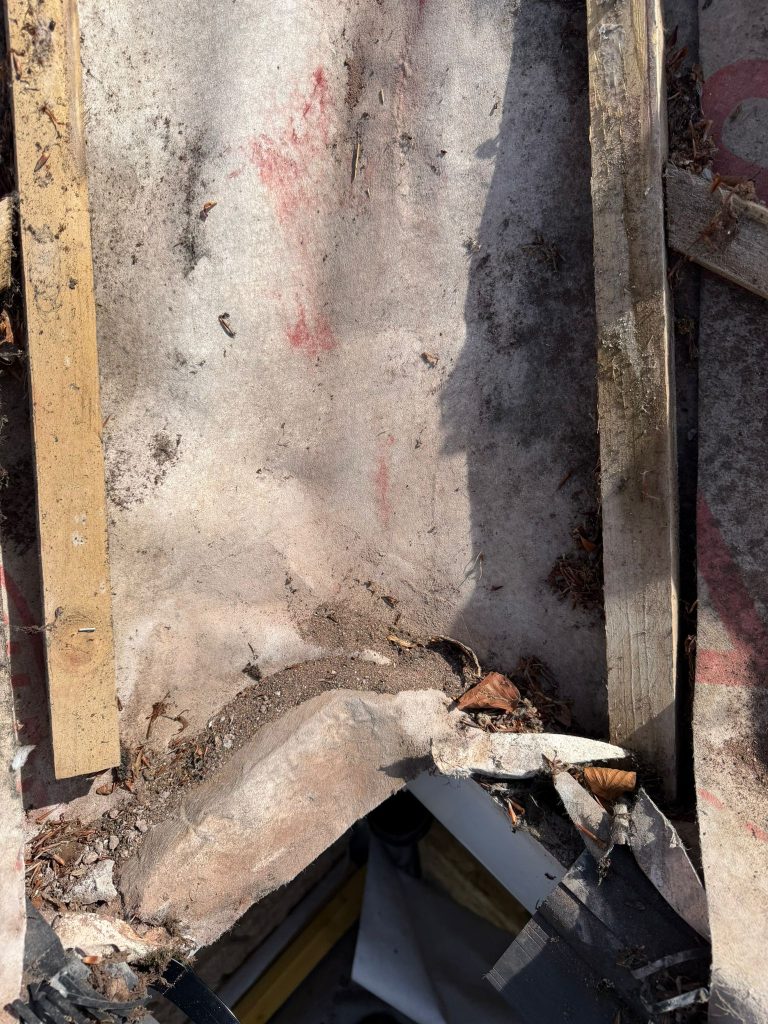
Rotten fascias can be hidden behind plastic
One of the problems we can discover is deterioration to the original timber fascia.
On some properties, an existing timber fascia has previously been covered with a plastic over-fascia. From ground level, the plastic may appear perfectly serviceable, while the timber behind it has started to rot.
Once the existing roof covering is removed and we can properly inspect the roofline, the extent of that deterioration becomes much easier to see.
This is why simply looking at the visible surface of a roof does not always tell you what condition the structure underneath is in.
What might be uncovered when your old roof comes off?
Tick each item as it is checked during your roof replacement.
Rafter ends can deteriorate around the eaves
The ends of the rafters are another area where problems can sometimes remain hidden.
In particular, we can find rotten rafter ends where an older roof has not had sufficient protection around the eaves. Rafters can also occasionally be split or otherwise damaged.
These are important details because a roof replacement should not simply cover deteriorated timber with new roofing materials.
If we find a problem once the roof has been opened up, it needs to be properly assessed so the new roof is being installed onto a suitable structure.
Gable-end fascias may also be rotten
The fascias around the gable ends of a property can suffer from the same type of deterioration.
Again, the extent of the problem is not always obvious until the existing roofing materials are removed.
Rotten fascias and roof timbers are therefore among the main potential additional issues homeowners need to be aware of when planning a roof replacement.
Existing tiles cannot always be reused
Another important question is what happens to the existing roof tiles.
Wherever practical, we may be able to reuse them.
In our experience at Mendip Roofing Contractors, around eight out of ten roofs we work on can involve reusing the existing tiles. If the tiles are still in good condition and appropriate for the roof, reuse can be a perfectly practical option.
However, there are occasions when tiles that initially appear reusable prove unsuitable once they have been removed.
The channels may be heavily worn. Too many tiles may break during stripping. Some may simply have deteriorated beyond the point where we would be comfortable putting them back onto the roof.
We can also discover that the tile originally used is not actually suitable for the pitch of the roof.
At that point, installing new tiles can become the better option.
This is why we consider both new and reused tiles when quoting
Unexpected tile replacement can have a significant effect on the overall cost of a reroof.
That is why, where appropriate, we try to give customers options when pricing the work: one based on reusing suitable existing tiles and another based on installing new ones.
It gives the homeowner a clearer idea of the potential difference before work starts.
Our service is built around honest pricing, clear communication and workmanship customers can trust. We arrange site visits so the work can be assessed properly before a tailored quotation is provided.
Older roofs can reveal different problems from modern ones
The age of a property can also influence what we find.
On older roofs, including Victorian and 1930s properties, the battens can be one of the most noticeable differences.
Older roofing battens were not manufactured to the same standards as many modern products. As a result, when we strip an older roof, the battens may be weaker and less suitable for reuse.
Older properties can also have very different detailing around chimneys.
Rather than the leadwork we commonly see today, some older roofs were finished using cement around the chimney and surrounding tiles. When these roofs are replaced, that detailing needs to be considered as part of bringing the roof up to the standard we want to achieve.
By comparison, a roof installed perhaps 30 years ago can sometimes be more straightforward to strip and replace. It may already contain more modern leadwork, while good-quality tiles can still have useful life remaining if they have not suffered significant damage.
If the roofing system has failed, patching one section is not always the answer
When a roof genuinely needs replacing, our preference is to deal with the roofing system properly rather than repeatedly applying small patches.
Take an old felt system as an example. If the underlay has deteriorated across the roof, repairing one small section does not address the condition of the rest of it.
The same principle applies to work such as verge repairs. Rather than applying another small amount of material to a failing section, it can be better to strip the affected detail out properly and relay it.
Our approach is about carrying out roofing work that lasts rather than putting a temporary bandage over a wider problem.
Roofing materials themselves have improved considerably
Roof replacement also gives us the opportunity to use products that have developed significantly over the last couple of decades.
Roofing membranes are one of the biggest examples. Modern membranes have changed the way roofs are designed to breathe and there is now a much wider range of products available for different roof specifications.
Battens have improved too. Modern graded battens are stronger and more consistent, while the fixings we use have also changed. Galvanised nails help avoid the corrosion problems associated with older steel fixings.
Roof tiles have developed as well, with stronger modern products and long manufacturer warranties available from some manufacturers.
Dry ridge and dry verge systems have also transformed the way certain roof details can be installed, reducing the reliance on traditional mortar-based methods and making the process significantly more efficient.
A roof replacement should deal with what is underneath, not just what you can see
For homeowners, one of the most important things to understand is that replacing a roof is not simply about taking old tiles off and putting new tiles on.
The condition of the fascias, rafters, battens, underlay, leadwork and tiles themselves all matter.
Some of those details can be assessed beforehand. Others only become completely clear once the roof has been stripped.
That is why we believe in inspecting the property properly, explaining what we find and carrying out the work needed to create a roof that is built to last.
Mendip Roofing Contractors is a family-run roofing business with 16 years’ experience and five generations of family roofing behind us. We work across Somerset and the wider South West, providing new roofs, reroofing and roofing repairs with an emphasis on honest advice, tidy workmanship and clear communication from start to finish.